EQUITY NEWS - December, 2009 | BIT in ZAGREB | By Anita Hollander, I AM PWD
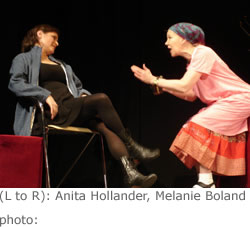
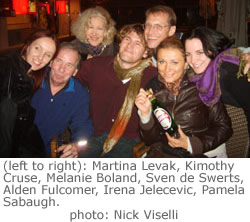 This October, in Zagreb, Croatia, I participated in Blind In Theatre: 6th International Theatre Festival of the Blind and Visually Impaired. I performed in A NERVOUS SMILE, by award-winning playwright John Belluso, with Theatre Breaking Through Barriers (TBTB), long-running NY theatre company founded by Ike Schambelan, introduced to me by AEA member George Ashiotis. The cast - Nick Viselli, Pamela Sabaugh, Melanie Boland, PSM Kimothy Cruse, Alden Fulcomer, and myself - viewed daily performances of various international companies including blind and low-vision artists, including Belgian, British, Bulgarian, Croatian, Finnish, German, Polish, and Serbian, after which we would have round-table discussions, with English as the common language. TBTB was well-received and given an award for long-term contributions to the festival. There were also workshops, movement sessions and works-in-progress. As an activist for greater visibility of artists with disabilities, I was bombarded each day by new insights and revelations about artists and art, whether disability-related or not, and was able to discuss our work on the tri-union I.AM.PWD media and civil rights campaign, as well as hearing what other countries do to incorporate artists with disabilities in their arts and entertainment.
 Most notable was the state funding for both arts and disability services. While we depend on funds from organizations like TDF and Artists International, in Europe, where Art equals Culture, state funding is provided, as well as funding for blind artists in Zagreb, including office and studio space, bar, access to a 300-seat theatre, street markings and devices for blind pedestrians around of these facilities. Croatian theatre artists do not lack for innovative production values either, while their young audience work is tremendously clever and economical. The Polish and Serbian companies sported sophisticated multi-media effects, and the Belgians were wildly creative and imaginative. Above all, these artists seemed to be respected, whether sighted, blind, or blind and deaf. They had a confidence and pride in their work which implied support and acceptance in their own cultures. Disabled people are used to terms like "brave, courageous, inspiring, indomitable spirit," but this theatre, riveting by nature of its story and craft, was more mind-blowing than inspirational.
On the last day in Zagreb, our guide/translator, Tina, took us to a massive ancient cemetery north of the city, where we read poetry amongst the beautiful ornate graves, many memorials of friends and family of our group. We Americans remembered John Belluso for his contribution to this festival from beyond the grave. A playwright with a disability himself, this week would have pleased him. As we listened to our fellow artists, it was clear how much we had in common, how passionate we were about our work, how tough-skinned and sensitive we all are. We shared the human experience across boundaries of time, space, language, culture, and physical ability. We perceived and accepted each other with the love of family and were proud to have been a part of such a confluence of humanity and art. (more info: www.tbtb.org and www.iampwd.org)

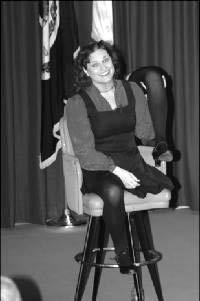 The actress has described her act as "a life survival guide set
to music," and "an awareness guide about the disabled." She
wrote the music and lyrics following the loss of her left leg to cancer
in 1977. A blend of humor, drama and honesty, the show has been performed
off-Broadway, as well as nationally at the White House and the Kennedy
Center.
The actress has described her act as "a life survival guide set
to music," and "an awareness guide about the disabled." She
wrote the music and lyrics following the loss of her left leg to cancer
in 1977. A blend of humor, drama and honesty, the show has been performed
off-Broadway, as well as nationally at the White House and the Kennedy
Center. 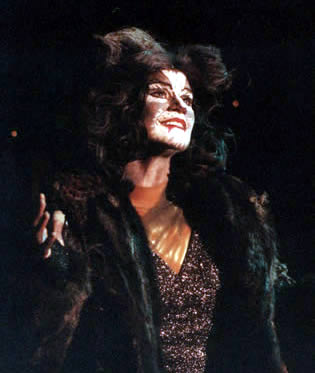 "Cats is a delightful spectacle with which the Surflight has done a magnificent job…Anita Hollander’s performance as Grizabella is the highlight of the show. The once glamorous Grizabella left the tribe to follow her dreams and she comes back as a prodigal daughter, shunned by some, defended by others. Much the worse for wear, not only is her coat torn, but, in this production, she’s lost a leg. There are no tricks involved. Hollander achieves this effect by simply not wearing her prosthetic leg. She lost a leg to cancer in 1977. When her Grizabella sings Memory while standing on her one good leg, she lends this shopworn tune an eerie dignity it has never possessed before and which you will not soon forget.” -Tom Wrona, The Beachcomber